Self-Assembly by Block Copolymers
We explore the use of controlled radical polymerization to prepare new block copolymers with a well defined structure. Reversible addition-fragmentation chain transfer polymerization (RAFT) seems best suited for polymerizing acrylamide derivatives and has been used in the preparation of di- and tri-block thermosensitive copolymers. The aggregation of these polymers can then be studied by various physico-chemical means. Their use includes rheology modifiers and controlled release vehicles.
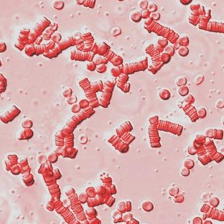
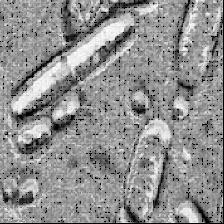
We have used atom transfer radical polymerization (ATRP) to modify the amphiphilicity of bile acids, naturally occurring steroidal compounds involved in self-assembling processes of many biological systems. The aggregation of such modified molecules is being studied by NMR, AFM, light scattering and electronic microscopy. In collaboration with Dr. Guy Cloutier of Notre Dame Hospital, Montreal, we are studying the effect of modified bile acids on the aggregation of red blood cells. This work has direct applications for ultrasonic imaging as well as in the treatment of cardiovascular abnormalities.
|
  |
|---|